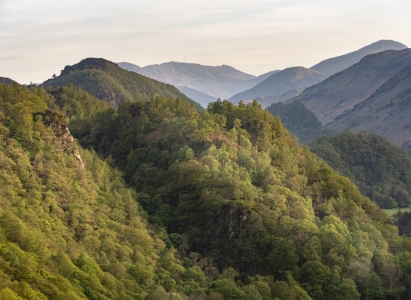
National Trust’s Borrowdale Rainforest – one of England's largest temperate rainforests
The Craghoppers x National Trust collaboration donates 10% of net sales to the National Trust, supporting vital conservation projects and helping to protect nature for future generations.
Funds from our first collection contributed to the ongoing restoration of peatland in the Peak District. Continuing to support nature in the North, for our second year, we were pleased to support the conservation projects in Borrowdale Rainforest in the Lake District.
Borrowdale is a temperate rainforest, one of only a few in the UK. Temperate rainforests are some of the rarest habitats on earth and are important carbon stores, acting as home to a rich variety of specialised animals, plants and fungi.
In 2024, Borrowdale was declared a new King’s Series National Nature Reserve, recognising its national importance for nature conservation. At the heart of the National Trust’s work is protecting and enhancing some of the natural habitats and wildlife in its care, as well as working with the surrounding local communities.
Back in October 2025 at the start of the funding period, we visited Borrowdale with Naturalist and TV presenter Jack Baddams, to learn more about the conservation initiatives taking place.
The funding from Craghoppers is helping to shape the future of Borrowdale National Nature reserve – from collating species data to conducting bird and wildlife surveys.
National Nature Reserve (NNR) – the future
By bringing together detailed species records, habitat information and conservation priorities, the team has developed a clear long-term vision for the reserve and the actions needed to protect and enhance it - ensuring Borrowdale continues to thrive for wildlife.
Surveying Borrowdale’s birdlife
Over 50 bird species were recorded across Borrowdale, including priority species such as Cuckoo, Tree Pipit and Wood Warbler, highlighting the area’s importance for threatened woodland birds.
Encouragingly, some birds such as the Tree Pipit and Cuckoo, were found in strong numbers despite national declines, reflecting the diversity of habitats across the site. The survey was carried out during the spring breeding season in 2025 and used repeated early-morning counts to capture birds at their most active, providing a snapshot of the breeding bird community. Invaluable for future restoration work across the reserve, the findings also provide an important baseline to the team monitoring bird populations over time.
Discovering Borrowdale’s Mosses and liverworts
Borrowdale’s rainforest is home to a variety of mosses and liverworts, collectively known as bryophytes, including several internationally rare species.
In total, 247 taxa (species, subspecies and varieties) were found across the surveyed sites, with populations of six nationally scarce species. One of the highlights found was Radula Voluta, a rare oceanic liverwort found in deep, wooded ravines in the far west of Britain.
As well as revealing the richness of Borrowdale's rainforest habitats, these surveys provide valuable evidence to guide future conservation work and track how these internationally important species respond over time.
"The surveys Craghoppers have funded in Borrowdale are invaluable for the work we are doing here to protect England's largest remaining patch of rainforest and the species within it. Now we have the data to make the best management decisions moving forward and also show the impact our work is having across the Nature Reserve"
- Jade Allen, Lake District Ranger Champion
Volunteering
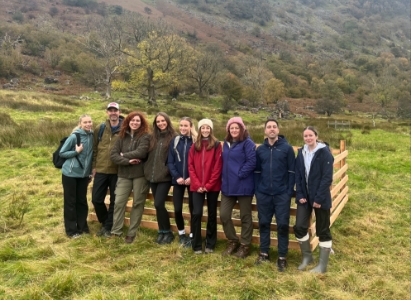
As part of Craghoppers’ support of the conservation initiatives taking place in Borrowdale, a team from the Craghoppers Head office headed up to the Lakes to take part in some volunteering activities.
Building tree cages to protect newly planted trees, they were able to see first-hand the benefits of the work taking place.
Images supplied by National Trust
Image credits:
Borrowdale - ©National Trust Images/Paul Harris
Bird - wood warbler (phylloscopus sibilatrix) ©National Trust Images/Paul Harris