Preparing for desert travel
Why is travelling through or to the desert so appealing? The heat, the sand, the stark blue skies stretching across the horizon. It’s a rare opportunity to experience such an environment. Even if you’re staying close to your facilities, there are important factors to consider. Including managing extreme heat, sun exposure, hydration, all essential for desert heat survival. In this post, we’ll explore how to prepare for desert travel, understand arid conditions, choose what to wear, and stay comfortable throughout your adventure, along with some desert travel tips.
Understanding arid desert conditions
Deserts aren’t just extremely hot and dry, they’re everchanging and diverse environments with extremes in different directions. Even knowing those environments are extremely hot, the heat can still overwhelm you.
Temperature swings: While daytime heat can be intense, evenings often cool rapidly and can even reach freezing temperatures through the night. Having versatile clothing options is essential.
Dry air: Low humidity means sweat evaporates quickly, making it harder to notice how much water you’re losing. If you’ve caught a nice breeze it can also trick you into thinking it’s cooler than it really is, increasing risk of burning.
Strong sun exposure: Shade is a luxury. With minimal shade and reflective sand or rock, UV exposure is significantly higher, hitting from the sun above, and bouncing from the ground below. This is called the Albedo Effect, meaning sand reflects a high percentage of sun right back up to you, further increase UV exposure.
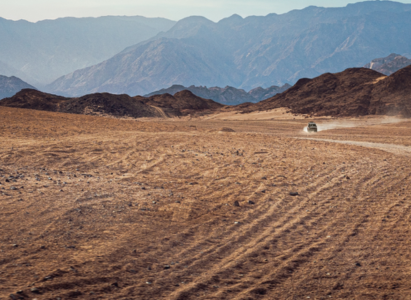
Varied terrain: Depending on the region, you might encounter soft sand, rocky ground, or hard packed desert floor.
Learning and setting yourself realistic expectations will help you pack smarter and stay more comfortable throughout the trip.
What to wear in the desert
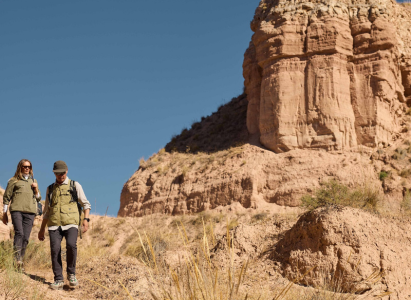
How to prepare for desert travel involves some learning. A strong starting point is to attempt to build an outfit that covers as much skin as possible, along with combining our modern clothing technologies. Light long sleeve shirts, long trousers, head covers and hats, boots etc. Before travelling, you might imagine soaking up as much sunshine as you can wearing shorts and short sleeves, relying heavily on factor 50 sunscreen. This is a tempting idea, though it isn’t practical. Yes, shorts have great breathability, however full trousers that are lightweight, breathable and moisture wicking both keep you cool and protect you from UV and even biting insects(if you’ve chosen the right pair). This is the logic we’ll be applying to our clothing list.
Read on for specific clothing options:
Long sleeve lightweight shirts
Breathable, loose fit, with sleeves that cover the wrists. The priority is to reduce UV exposure, whilst regulating heat by allowing airflow. This also helps protect against biting insects, especially near any water sources.
Trousers
Long trousers shield from the sun and minimize any risk of wind burn with abrasive sand. Moisture wicking and quick dry fabrics will help regulate temperature for both high heat during the day, and when it cools into the night. A good compromise would be zip-off trousers for hotter evenings.
Wide-Brim hats & caps
Shade you can carry with you is invaluable. A wide brim hat can help reduce eye strain whilst also protecting your ears and neck from the sun, more effectively than a standard cap. Desert hats with neck flaps offer even more coverage.
Footwear
Breathable, closed-toe boots or shoes are ideal. Sandals are appealing to keep your feet well aerated, though the right footwear comes down to your planned activities for the day. Boots or shoes protect from the sun, as well as from hot sand and any sharp rocks or stones that might otherwise find their way underfoot.
Insulating layers
As mentioned before, arid and desert regions can get cold at night. However, it all depends on which region you’re in, your elevation and the season. Generally though you could expect the night-time temperature in the summer to drop to anywhere in between 5 to 24 degrees Celsius. A lightweight fleece could be a great comfort.
Socks
Choose comfortable, moisture wicking socks. Breathability and anti odour features are especially helpful in hot environments. Quality socks reduce friction and help keep your feet comfortable on rocky or uneven terrain.
Managing hydration
Desert heat is dry which means your body loses water faster than you might in a humid environment. You also lose moisture through your breath, so when exerting yourself you will lose water much faster than most are used to. The sun brings heat, your exertion brings heat, you sweat and you breathe out water. Water loss is accelerated here.
Not only are you losing water faster but also salts. Having a lightly salted snack in the desert heat can seem counter intuitive though it may actually be beneficial. Many travellers use electrolyte tablets or rehydration salts, which come in small sachets that you would mix with water. These help replace both fluids and essential minerals lost through sweat.